Tag: Environment
-
Happy World Environment Day!
Happy World Environment Day! When most people think of CERN, they think of particle collisions, the Higgs boson and the boundaries of human knowledge. But there’s another frontier CERN is quietly advancing: environmental responsibility CERN’s 4th Environment Report (2023–2024) – the most recent to date – is a powerful reminder that big science and sustainable
-
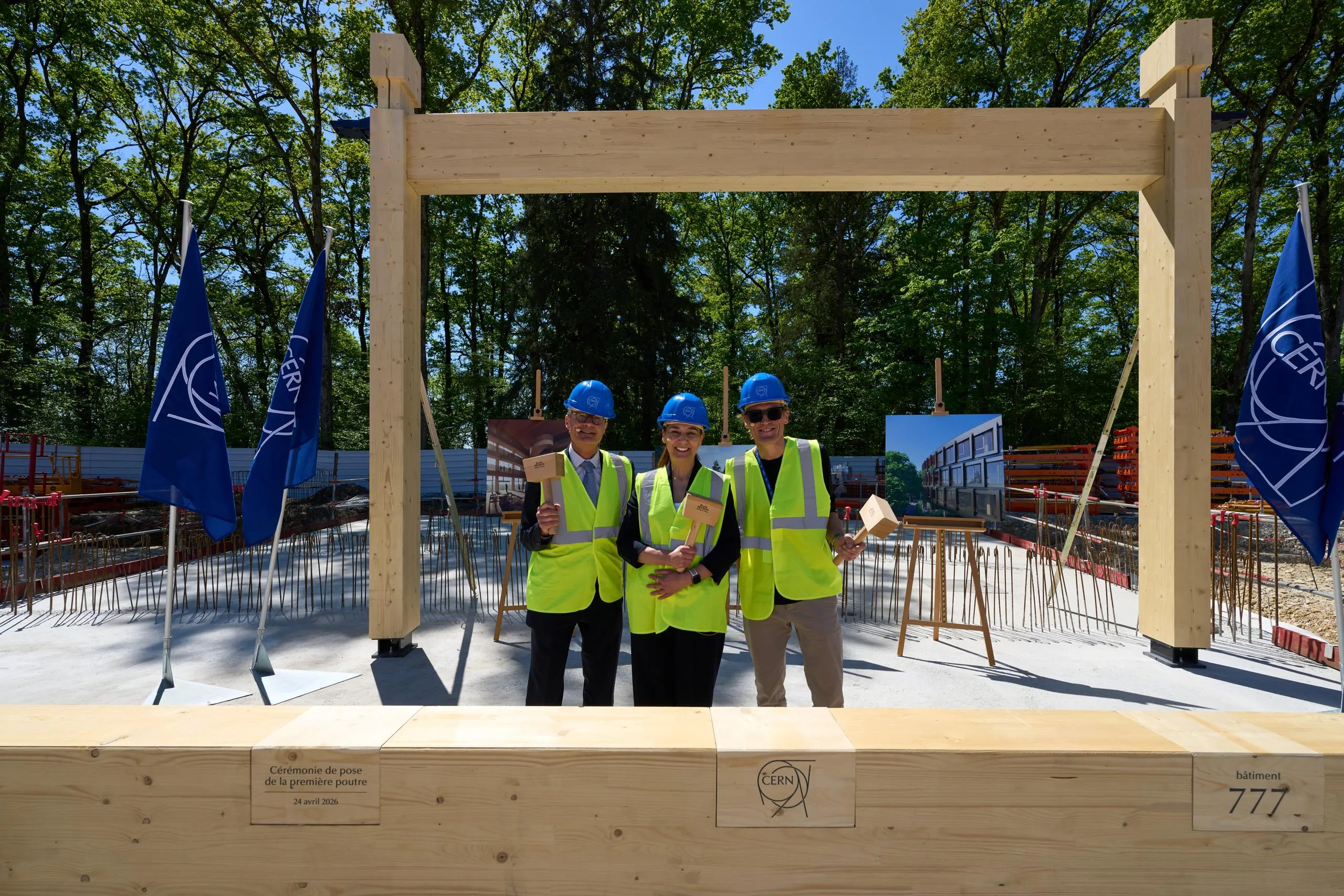
First timber beam installed for CERN’s new Building 777
First timber beam installed for CERN’s new Building 777 On 24 April 2026, CERN marked a key milestone for Building 777 in Prévessin with the installation of its first timber beam On Friday, 24 April 2026, CERN celebrated an important milestone in the construction of the future Building 777 on the Prévessin site: instead of
-
CERN publishes its second public environment report
CERN publishes its second public environment report The document details the current status of CERN’s environmental footprint, along with objectives for the coming years On 24 November, CERN published its second public environment report, covering the years 2019 and 2020. In 2019, CERN made a commitment to communicate on its environmental footprint every two years
-
CERN publishes its first public Environment Report
CERN publishes its first public Environment Report Le premier rapport public du CERN sur l’environnement souligne l’engagement de l’Organisation en faveur d’une recherche respectueuse de l’environnement. On 9 September, CERN’s first public Environment Report was published, outlining the Organization’s commitment to becoming a role model for environmentally responsible research and setting out concrete objectives for
-
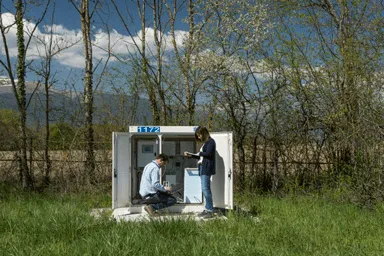
How is radiation monitored and controlled?
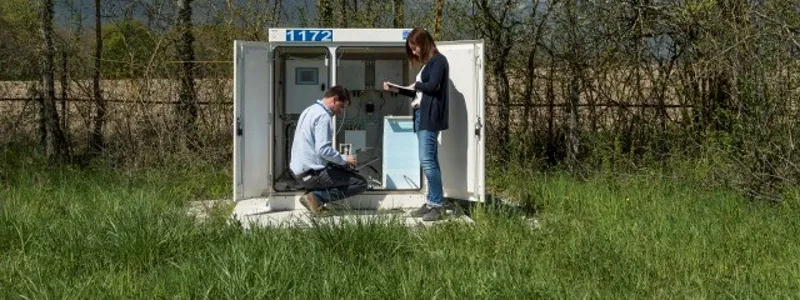
CERN adheres to an internationally recognised radiation protection system that continuously strives to minimize radiation exposure and, consequently, CERN’s emissions remain consistently well below regulatory limits. CERN’s radiation protection team surveys the ionising radiation produced inside the facilities and close to the facilities. Alarmed gate-monitors are installed and managed by CERN’s radiation protection team to
-
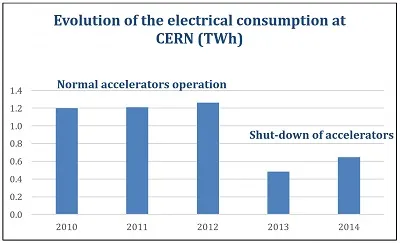
Electricity consumption
CERN consumes the most electricity when its most powerful accelerator, the Large Hadron Collider (LHC), is running, which consumes roughly half of CERN’s electricity. CERN has a typical yearly consumption of about 1.2 terawatt-hours (based on the consumption of the year 2012 when the LHC was running). This figure represents approximately a third of the
-
Sustainable Buildings and Transport
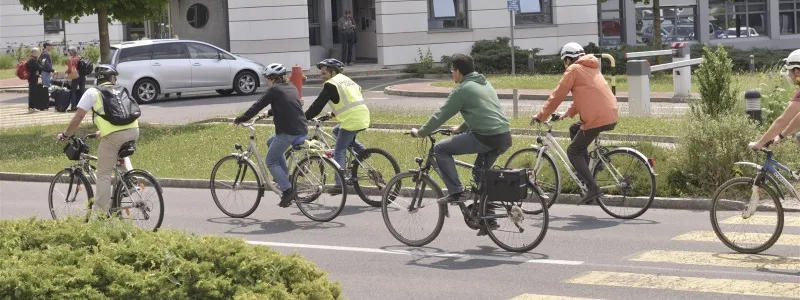
With a growing number of users and various sites, relatively distant from each other, transport is a major concern at CERN. Several initiatives have been launched over the past years to facilitate mobility on site, to reduce CERN’s fleet of vehicles and to limit the impact from transport. A car-sharing service, with 35 vehicles at
-

Preserving the landscape
To reduce the visual impact of new buildings on the landscape, plans are discussed with local authorities to ensure that additions to CERN sites do not alter the overall appearance. Landscaping projects include trees, bushes and grassy areas planted to ensure that CERN sites remain natural and indigenous to the local area. CERN sites stretch
-
Minimising ionising radiation
To study the composition of matter, CERN uses particle collisions that generate ionising radiation. CERN continuously monitors its ionising radiation levels to ensure that its releases to the environment are negligible. The vast majority of CERN’s radioactive materials are not contaminating and all radioactive materials are stored and handled following standard regulations. CERN adheres to
-

Recycling and sorting waste
CERN collects approximately 5500 tonnes of waste per year of which roughly 1700 tonnes are conventional waste and 1100 tonnes are hazardous waste (e.g. impregnated cable drums, chemicals waste, etc.) processed by specialised certified companies. Some 1850 tonnes is scrap metal, electric and electronic material, which is either recycled or sold. CERN strives to continuously

