Tag: Radiation
-
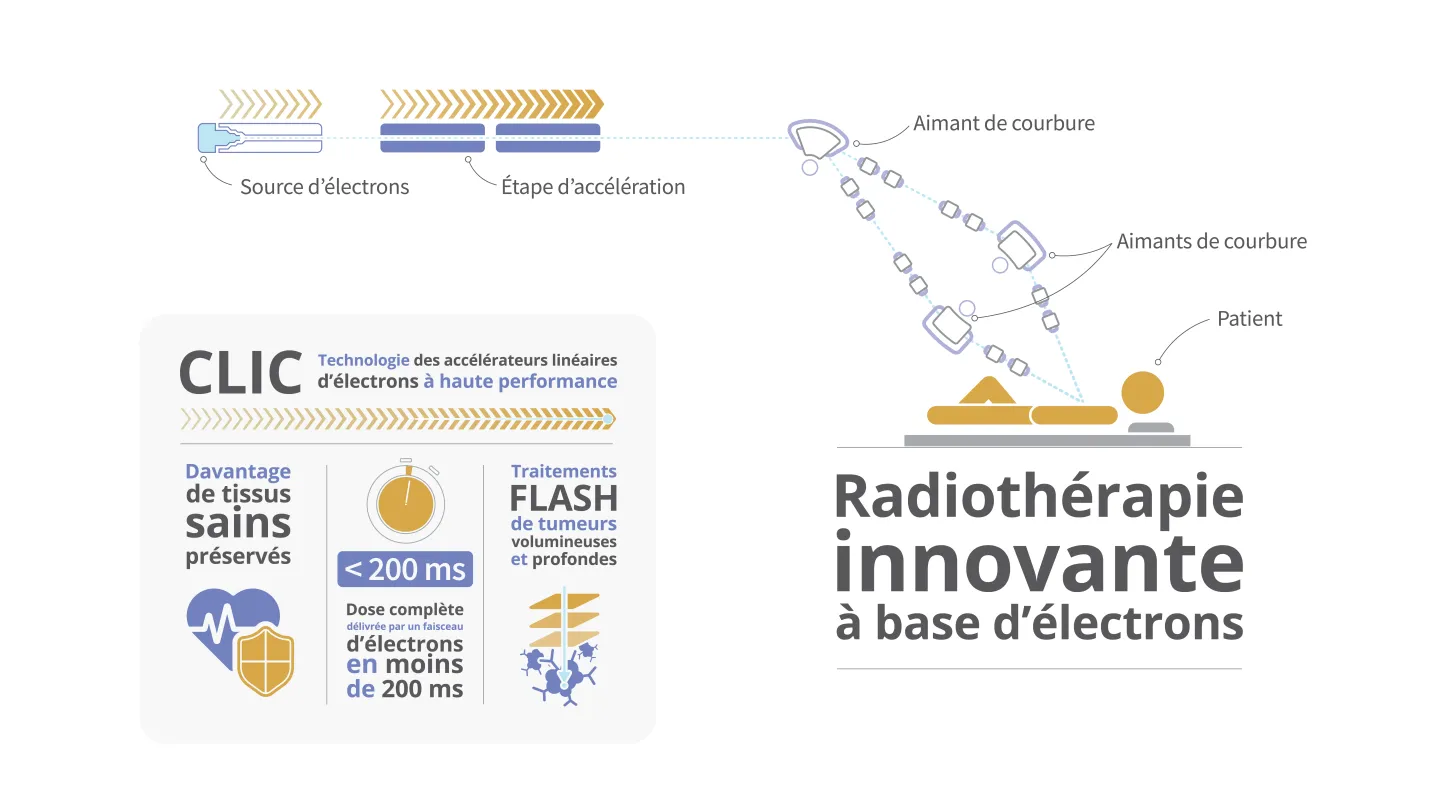
CERN, CHUV and THERYQ join forces for a world first in cancer radiotherapy
CERN, CHUV and THERYQ join forces for a world first in cancer radiotherapy CERN, CHUV and THERYQ have signed an agreement for the development of a revolutionary FLASH radiotherapy device The schematic shows the concept of a new revolutionary VHEE FLASH radiotherapy device (Image: CERN) CERN, the Centre Hospitalier Universitaire Vaudois(CHUV) and THERYQ (ALCEN group)
-
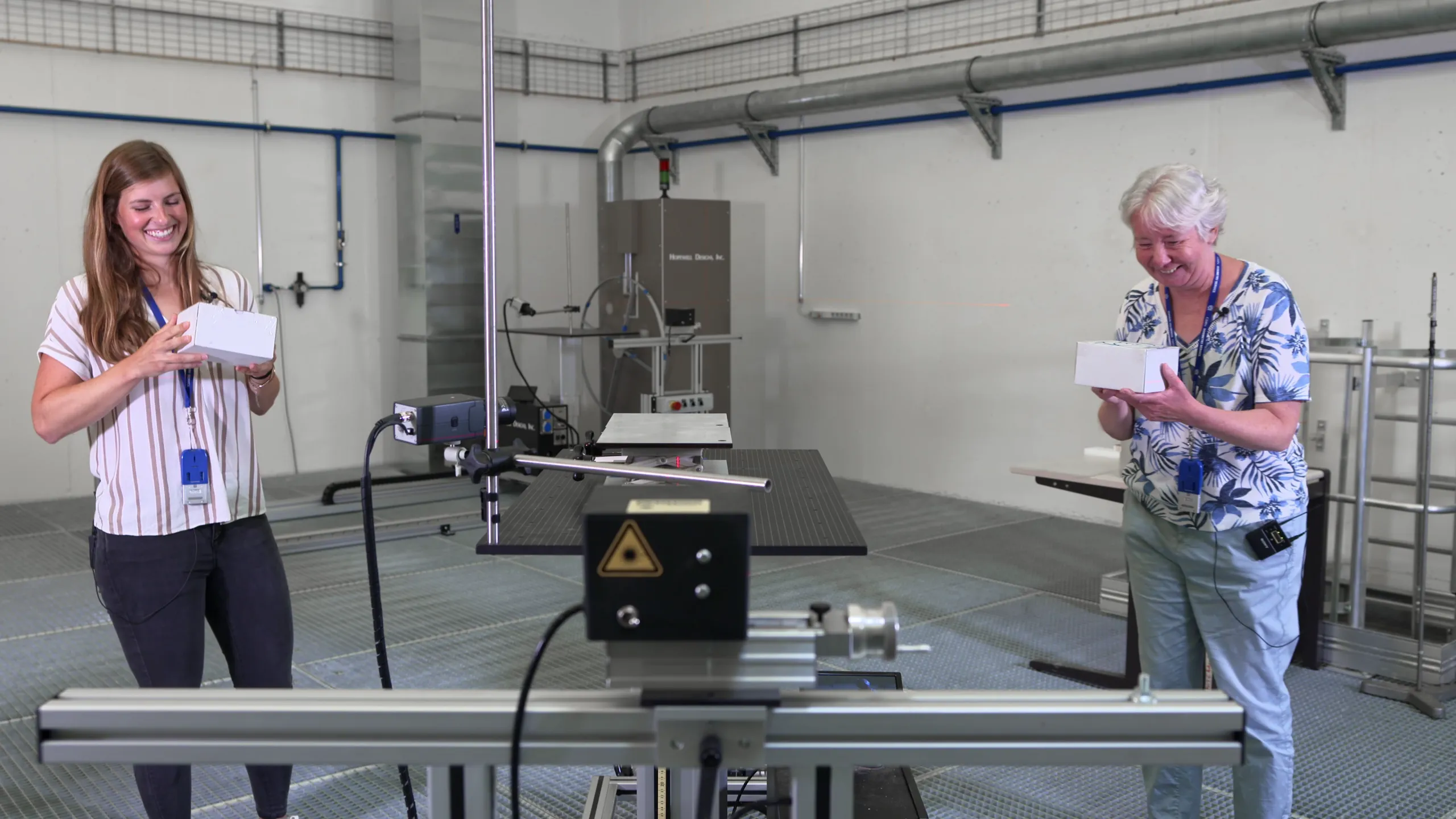
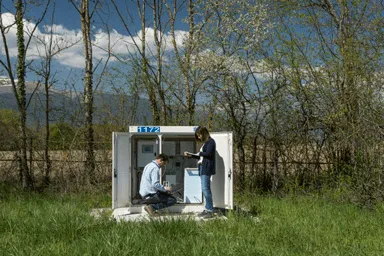
CERN scientists Pippa Wells and Sabrina Schadegg give the primary schools challenge a go
CERN scientists Pippa Wells and Sabrina Schadegg give the primary schools challenge a go Used to making precise measurements, will Pippa and Sabrina be able to figure out what’s inside the mysterious boxes? Since 2011, schools from Geneva, the Pays de Gex and Haute-Savoie have been receiving strange mystery boxes from CERN. The pupils, aged
-
CERN and Lausanne University Hospital collaborate on a pioneering new cancer radiotherapy facility
CERN and Lausanne University Hospital collaborate on a pioneering new cancer radiotherapy facility CERN and the Lausanne University Hospital (CHUV) are collaborating to develop the conceptual design of an innovative radiotherapy facility, used for cancer treatment Geneva and Lausanne. CERN and the Lausanne University Hospital (CHUV), in Switzerland, are collaborating to develop the conceptual design
-
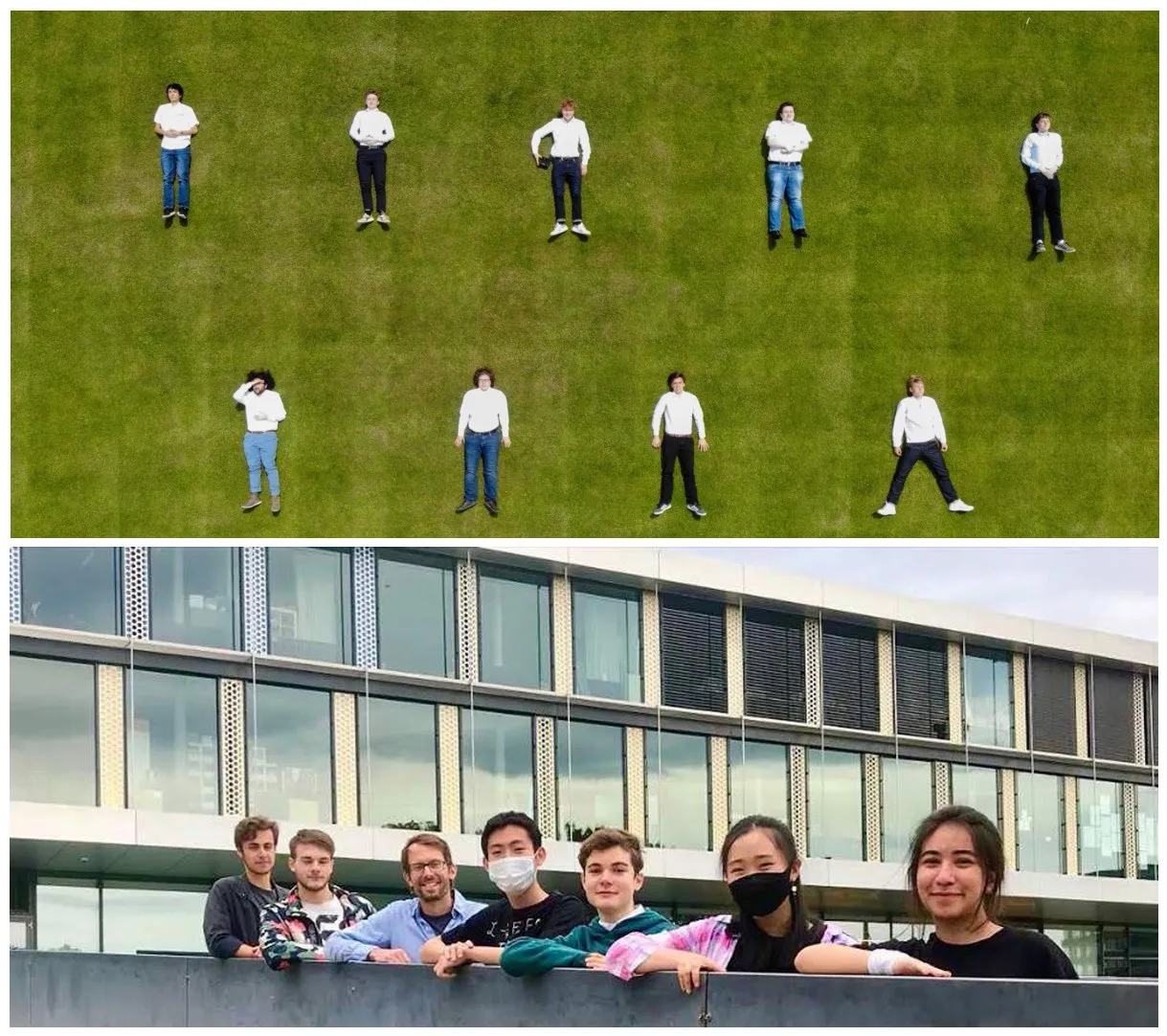
A high-school team from Geneva wins first place in the CERN Beamline for Schools competition
A high-school team from Geneva wins first place in the CERN Beamline for Schools competition Two teams of high-school students, one from the International School of Geneva, Campus des Nations, Switzerland, and one from the Werner-von-Siemens-Gymnasium in Berlin, Germany, have won the 2020 Beamline for Schools competition Geneva and Hamburg, 15 June 2020. Two teams
-
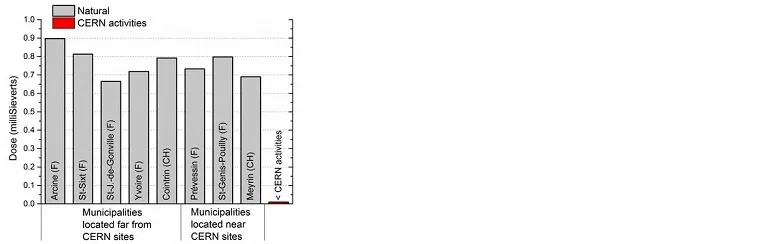
How much ionizing radiation is produced at CERN?
The effective doses to members of the public living closest to CERN and attributed to CERN facilities are so low that they are almost impossible to measure. People living near CERN’s sites receive a maximum annual dose in the range 0.01-0.02 millisieverts, less than 1% of the annual dose received from other sources such as
-
How is radiation monitored and controlled?
CERN adheres to an internationally recognised radiation protection system that continuously strives to minimize radiation exposure and, consequently, CERN’s emissions remain consistently well below regulatory limits. CERN’s radiation protection team surveys the ionising radiation produced inside the facilities and close to the facilities. Alarmed gate-monitors are installed and managed by CERN’s radiation protection team to
-
What are the types of ionizing radiation?
The majority of the radiation produced by particle collisions is absorbed by the accelerator components. The majority of the radionuclides have short half-lives, the typical half-life being 5.3 years. This means that they are radioactive for only a very short time. Within the CERN facilities the radiation is dealt with following the appropriate radiation protection
-
Why does CERN produce ionizing radiation?
CERN’s experiments involve colliding particles beams together or into a stationary target. When this happens some of the particles release radiation or new particles are created. Radiation only occurs at CERN when the particle beam is on, and turning it off stops the emissions immediately. Collision events are also very rare; at the Large Hadron
-
What is ionizing radiation?
Ionizing radiation is energy that is transported through particles or waves, such as electromagnetic radiation (X-rays, gamma rays), neutrons, etc. It occurs, for example, when unstable atoms decay to form stable atoms, and release some of their energy. Rocks, the Sun and Space all naturally emit ionizing radiation that we can detect on Earth. Artificial
-
Is CERN a nuclear laboratory?
CERN, the European Organization for Nuclear Research, is a laboratory that studies particles and their interactions, but is not concerned with nuclear energy or weaponry. The name is derived from European Council for Nuclear Research, a provisional body founded in 1952 with the mandate of establishing a world-class fundamental physics research organization in Europe. At
